
A closer look at how simple, well-designed children’s books can support communication, participation, confidence, and meaningful interaction in the early years.
Lorilet Monegro, EdD
Parents and educators often understand that the early years matter, but it is easy to overlook the developmental importance of the small moments that fill a young child’s day. A child reaching for a new object, trying to join an activity, waiting for a turn, attempting something independently, or repeating an action again and again may seem to be engaged in something overly simple. But these first experiences help shape how children approach effort, challenge, participation, and learning over time. They are part of the foundation for confidence, resilience, and a growing sense of capability.
Young children learn primarily through direct engagement with people, objects, and routines in their environment. They build understanding by observing, trying, repeating, and gradually taking on more responsibility within meaningful experiences. When adults create opportunities for children to participate without stepping in too quickly, children gain more than practice. They develop persistence, problem-solving, and trust in their own efforts.
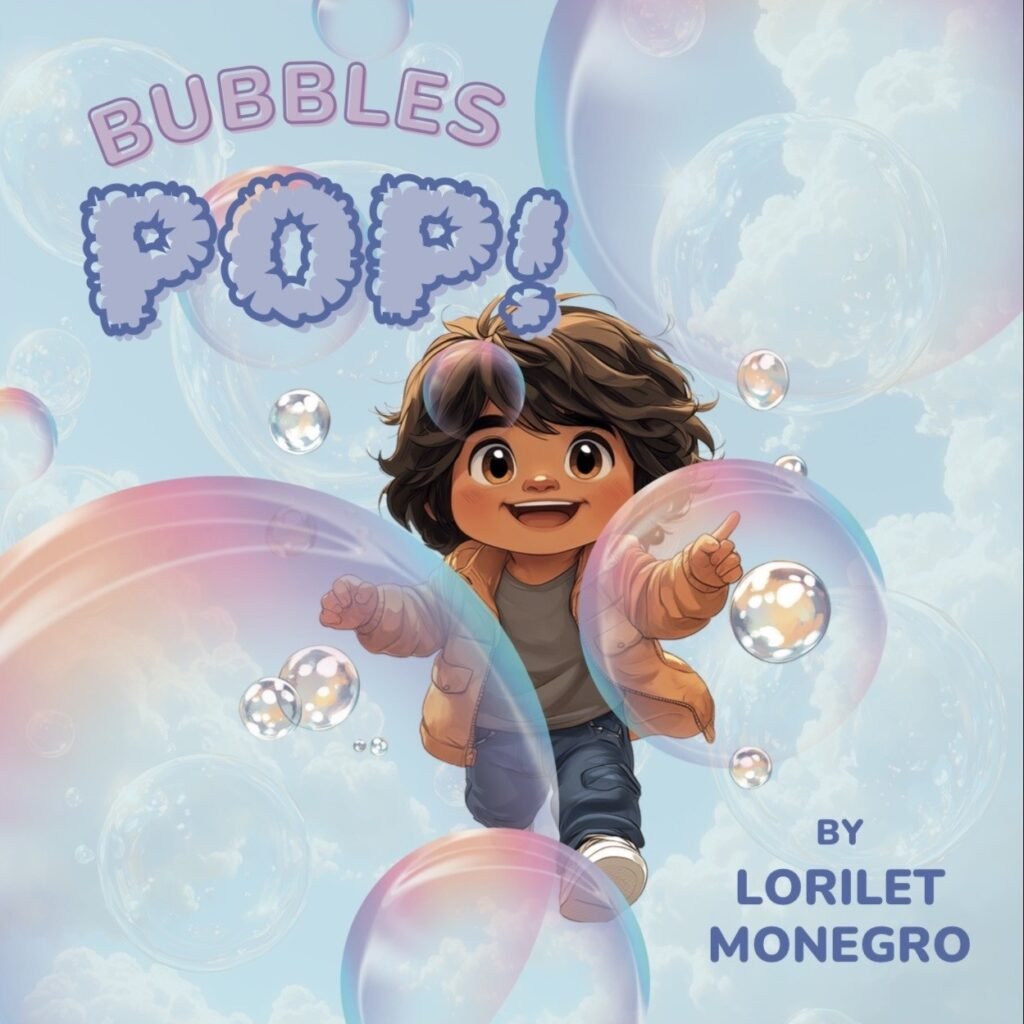
This is one reason children’s books can be so valuable when they are written with developmental purpose in mind. A strong early childhood book does more than entertain. It can support language, shared attention, interaction, emotional connection, and meaningful repetition. It can also help adults slow down and notice what is happening beneath a child’s excitement, effort, and participation. In that sense, the right book becomes more than a story. It becomes a practical resource that adults can use to support growth in ways that feel natural and engaging.
Bubbles Pop! was written with that kind of purpose in mind. On the surface, it is a playful story about Matt, bubbles, and a shared family experience. At a deeper level, it reflects several of the moments that matter most in early childhood. Matt wants to participate. He watches what others are doing. He asks for more. He waits. He tries. He receives support. Eventually, he succeeds in taking part himself. That sequence mirrors how many children learn in everyday life: through interest, observation, supported participation, repetition, and growing independence.
The value of Bubbles Pop! is not that it tries to do everything. Its value is that it stays close to experiences young children can understand and that adults can build on. Bubble play is naturally motivating for many children, which makes it a useful context for interaction and early communication.
Within the story, children are exposed to repeated language connected to meaningful action. They hear and can begin to use words such as ‘pop,’ ‘more,’ ‘go,’ and ‘stop’ while also connecting those words to movement, anticipation, turn-taking, and shared enjoyment. Young children learn best when language is tied to what they can see, do, and experience directly, and the story offers exactly that kind of connection.
From a practical standpoint, this makes Bubbles Pop! book useful across settings. Parents can use it during shared reading and then extend the learning through bubble play at home. Educators can use it during interactive read-alouds to support participation, vocabulary, and discussion. Speech-language professionals can build activities around requesting, action words, turn-taking, sequencing, and early expressive language. The teacher guide already created around the book reflects that same potential by using the story as a foundation for structured instruction, communication practice, and playful learning.
One of the strongest aspects of the story is that Matt is not simply a passive observer. He is engaged in a process. He wants to do something, depends on others at first, and gradually moves closer to doing it himself. That matters because children benefit from seeing that learning often involves waiting, effort, support, and participation. Confidence does not develop through praise alone. It grows through repeated experiences in which children are allowed to engage, try, and experience success in meaningful ways.
For families, this is where the book offers real value. Parents are often looking for resources that are enjoyable for children but also meaningful. They want books that support language, interaction, and development without feeling overly technical. Bubbles Pop! offers that balance. It is simple enough for young children to enjoy, interactive enough to keep them engaged, and purposeful enough to give adults something valuable to build on. It supports not only a positive reading experience, but also the everyday interactions that help children grow.
For educators and professionals, the book serves as a reminder that not every useful resource needs to be complex. Young children often benefit most from stories built around familiar routines, repeated phrases, and developmentally meaningful experiences. When a book is accessible and motivating, it becomes easier to revisit, extend, and use in different ways. That increases its value for home, classroom, and therapy use.
Ultimately, Bubbles Pop! is valuable because it meets young children where they are. It reflects the kinds of moments that genuinely shape early development and gives adults a way to support communication, participation, and confidence through something joyful and usable. For families and professionals who want children’s books to do more than entertain, Bubbles Pop! offers a meaningful resource grounded in the kinds of experiences that matter to children most.
If you are looking for a children’s book that supports early language, interaction, participation, and confidence through a playful and relatable experience, Bubbles Pop! is a strong choice for home, classroom, and therapy use.
Bring Bubbles Pop! into your home or learning space and turn story time into an opportunity for communication, connection, and growth.
You can get it now through Amazon.
About Dr. Lorilet Monegro
Dr. Lorilet Monegro, EdD, is an author, bilingual speech-language pathologist, executive leadership scholar, and transformational educator who helps families, professionals, and women leaders use communication as a pathway to confidence, growth, and lasting impact.
Through her work with The Speech Language Solutions Hub and Speak • Lead • Connect™, she blends science, leadership, language, and human potential to create tools, training, and transformational learning experiences that help people find their voice, strengthen their presence, and change generations through the power of communication.